


Our definition of sustainability
For us, sustainability is more than just a trend; it is central to our mission. This was already evident when Rotho was founded in 1889, with the construction of a hydroelectric power station to generate energy. Even more than 135 years later, reducing our greenhouse gas emissions remains a key part of our strategy. For this reason, over 98 per cent of the electricity we use comes from renewable energy sources, and we generate part of our electricity requirements ourselves through solar panels on our company roofs. For us, economic success and environmental responsibility are inextricably linked. We continue to refine our understanding of sustainability every year in order to gradually reduce our greenhouse gas emissions. Our short- and long-term science-based targets for reducing greenhouse gas emissions have been recognised by the Science Based Targets initiative (SBTi).

Towards net-zero emissions
Our short-term and long-term science-based targets for reducing greenhouse gas emissions have been validated by the Science Based Targets initiative (SBTi). This ensures that our emission reduction targets are aligned with science-based climate pathways. The SBTi’s standards are designed to limit global temperature rise to 1.5 °C above pre-industrial levels. We have set ourselves the target of achieving net-zero greenhouse gas emissions by 2050 in accordance with the SBTi Corporate Net-Zero Standard. Furthermore, we are committed to reducing our Scope 1 and Scope 2 emissions (including operational facilities, company vehicles, purchased electricity, heating and cooling) by 50.4 per cent by 2032 compared with the base year 2022, and our Scope 3 emissions (including raw materials, logistics, disposal of products sold) by 30 per cent by 2032."

Discover our Zero Waste Vision
As part of our environmental strategy, in 2022 we introduced the ‘Zero Waste Vision’ at Rotho as a guiding principle for waste prevention and the more efficient use of resources. We currently see the greatest progress in the following areas:

As of today, 98% of electricity comes from renewable sources

Our goal: Net-zero greenhouse gas emissions by 2050, in line with the SBTi Corporate Net-Zero Standard

As of today, 90 per cent of all packaging is made from recycled material

As of today, 41 per cent of all products are made from recycled plastic
Make conscious decisions: Products made from over 90 % recycled material
Our collection
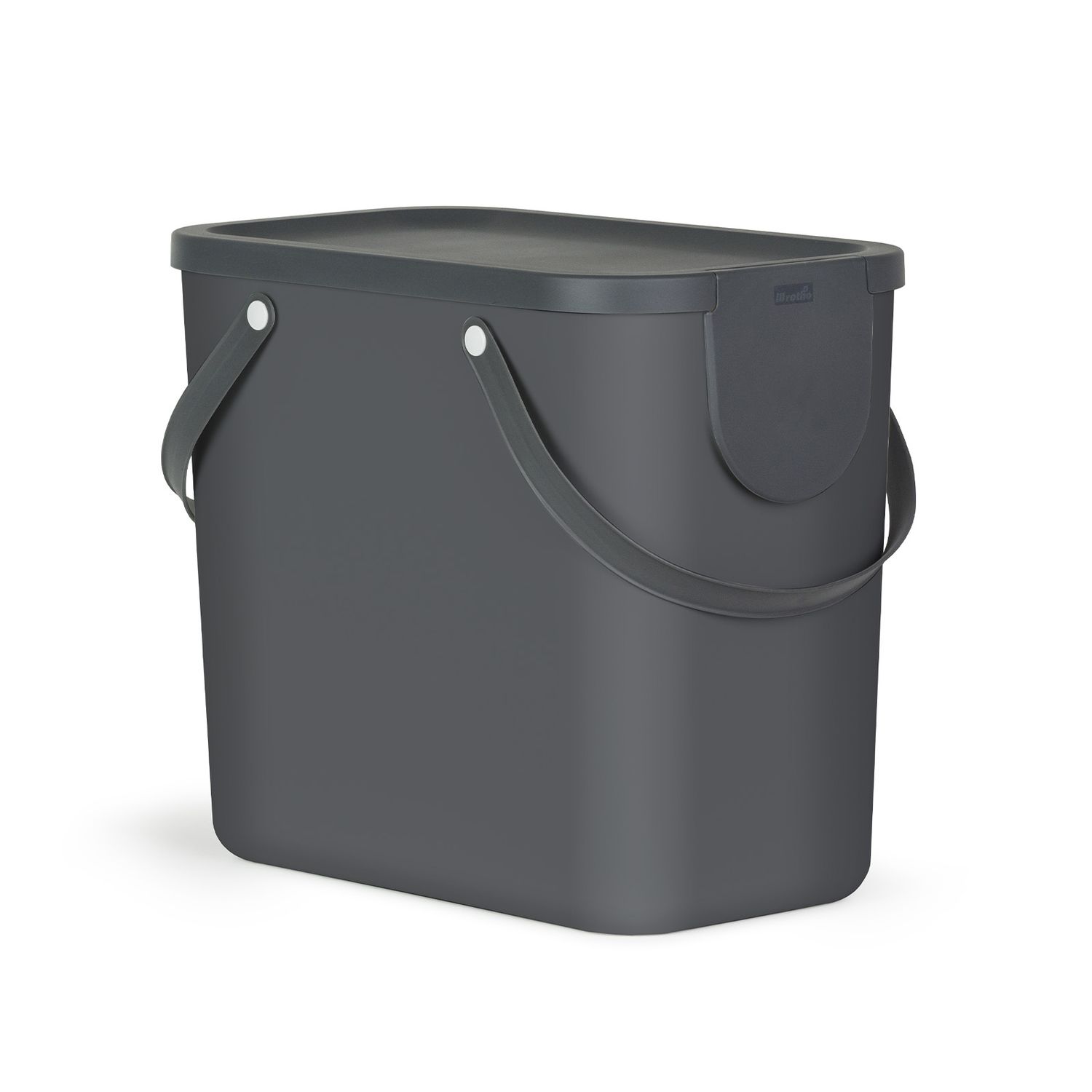
Recycling waste system 25 l
ALBULA

MY PAPER Plus Inbox document organiser

Large Storage Box 16L l
BRISEN